Day 9 Meteora: Discovering The Magic Of Greece’s Sacred Cliffs
Rising from the Thessalian plain like a dream, Meteora is where sky and stone collide in quiet grandeur. From Kalambaka’s charming village streets to the monasteries perched impossibly high, Day 9 Meteora was a revelation of sacred beauty, Greek tradition, and a deep sense of stillness beneath the clouds.
Introduction: The Road to the Skies
Leaving the coastal warmth of Athens behind, we began our morning journey toward the fabled monasteries of Meteora — a place that had lingered in our imaginations for years. Our day started early, packing the car one final time for a 4-hour drive back to Athens, where we returned our rental car under the golden morning light. From there, the next leg of our journey awaited: the train to Kalambaka — a 4.5-hour passage (€20–25 / ~AUD 33–41) through the changing Greek landscape, from olive groves to mountain valleys that whispered of centuries past.
The rhythmic sway of the train felt almost meditative as the Greek countryside unfolded outside our window — endless fields of sunflowers, cypress trees standing like sentinels, and stone villages tucked into the hills. With each passing mile, anticipation grew. Meteora wasn’t just another stop on our itinerary; it was a dream suspended between earth and heaven — a place where faith, nature, and time converge in silent grandeur.
Morning Journey: Through the Heart of Greece
The train ride was a slow unfolding of scenery — rolling fields, terracotta-roofed villages, and distant mountains layered like watercolor. The rhythmic clatter of the tracks created a hypnotic calm. My partner and I shared a small picnic of spanakopita (spinach pie, €3) and iced coffee as we watched the countryside blur by. Occasionally, locals joined us with friendly nods, baskets of fruit, and that easy Greek warmth that always makes travel here feel personal.
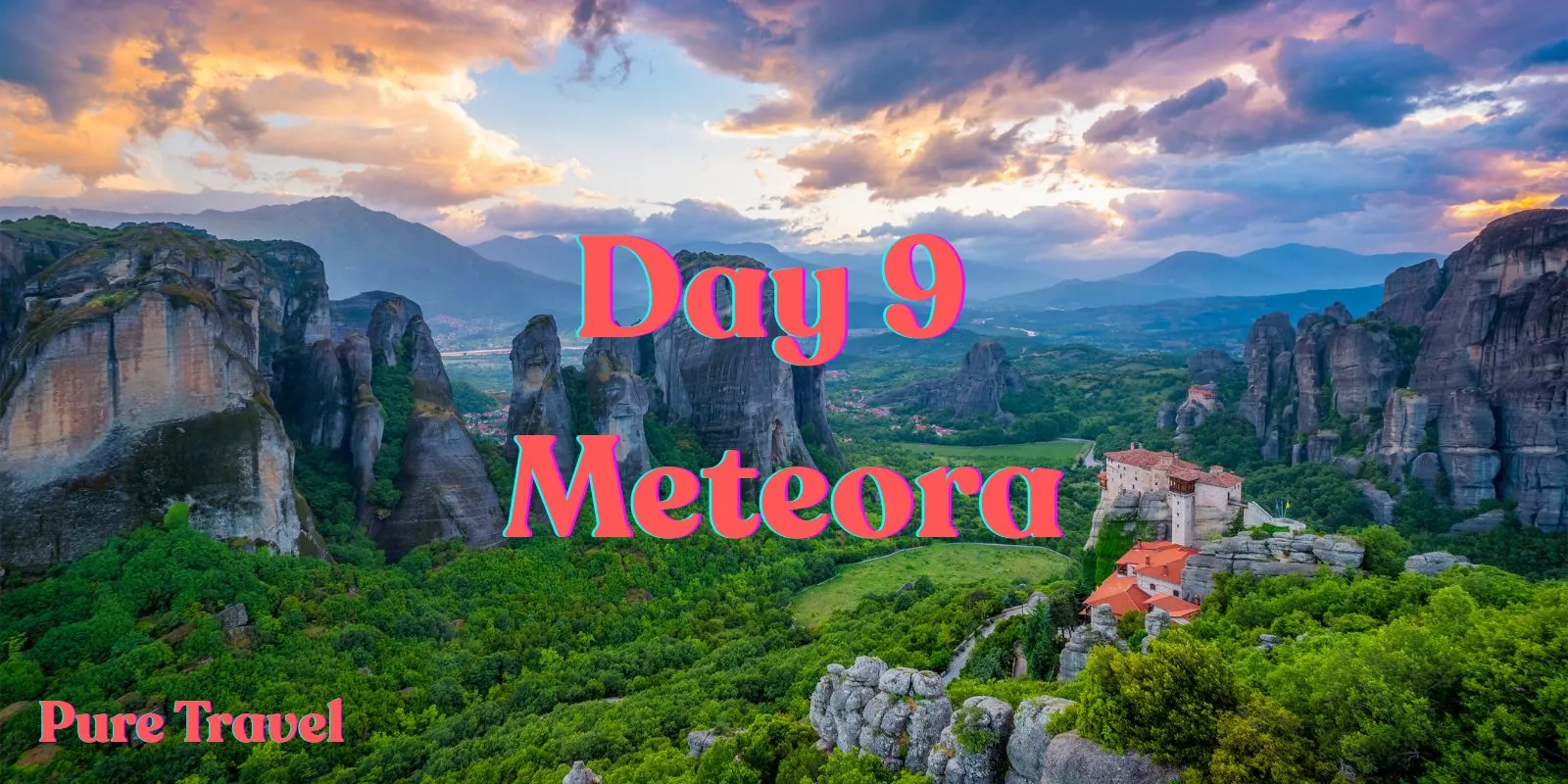
As we approached Kalambaka, the view began to change dramatically. Day 9 Meteora – Towering pillars of rock rose suddenly from the plains, their summits crowned with ancient monasteries that seemed to float in the sky. Even through the train window, the sight was breathtaking — a natural wonder intertwined with centuries of devotion.
Afternoon: First Glimpse of Meteora’s Majesty – Day 9 Meteora
We arrived in Kalambaka by mid-afternoon, the sun still bright and generous. Our guesthouse (€45 / ~AUD 75 per night) sat at the foot of the cliffs, with balconies facing the towering rocks. The air was crisp and filled with the faint scent of pine and stone dust — earthy, grounding, and deeply calming after a long travel day.
After a quick check-in, we wandered through the village streets. Kalambaka was charming in its simplicity: whitewashed houses, blooming geraniums, and cafés spilling laughter and the aroma of Greek coffee. Every turn seemed to offer a postcard view — monks’ trails winding up to the cliffs, the evening light painting gold over the sandstone spires.
Day 9 Meteora – We followed a short trail that led us toward one of the lower rock formations, where we sat for a while to absorb the view. The sound of distant church bells echoed softly through the valley, blending with birdsong and the murmur of the wind weaving between the rocks. There was a sense of reverence here — not forced, but natural — as if the entire landscape asked for quiet.
Evening: Dining Beneath the Cliffs
As dusk settled, Kalambaka transformed. The cliffs glowed in the fading sunlight, and lights began to twinkle from the monasteries above. We chose a small taverna tucked near the main square for dinner, its terrace offering a perfect view of the rocks silhouetted against a violet sky.
I ordered a moussaka (€12 / ~AUD 20), its layers of eggplant, minced meat, and béchamel sauce melting together in rich perfection. My partner opted for grilled lamb with lemon potatoes (€15 / ~AUD 25), paired with a glass of local red wine (€6). The air carried the scent of oregano, charred meat, and sweet smoke — a heady mix that felt quintessentially Greek.
We lingered long after our plates were cleared, sipping wine and watching the cliffs fade into darkness. Meteora felt timeless, almost sacred — not just for its monasteries, but for the peace it inspired. It was one of those rare travel moments where you stop chasing sights and simply breathe them in.
Pro Traveler Tip – Day 9 Meteora
Take the afternoon train from Athens rather than morning — you’ll arrive just in time for sunset views over the cliffs. If possible, book a guesthouse with a view toward the monasteries; the light at dusk and dawn is unforgettable.
Pro Traveler Warning
Kalambaka’s smaller restaurants can close early outside of summer months, especially on Sundays. Plan your dinner before 9 PM to avoid limited options. Also, keep cash handy — many family-run tavernas don’t accept cards.
Your Journey Among the Stones
Meteora wasn’t just another stop on our Greek itinerary — it was a revelation. The quiet majesty of its cliffs, the warmth of Kalambaka, and the humbling sight of monasteries balanced between heaven and earth all came together to create something beyond words. This day reminded us why we travel: to feel small in the best way possible, standing before wonders that make you pause — and simply exist.
Frequently Asked Questions – Day 9 Meteora (Greece’s Sacred Cliffs)
Where is Meteora located?
Meteora is in central Greece, near the town of Kalambaka in the Thessaly region. It’s about 360 km northwest of Athens and easily reachable by train, bus, or car.
How do I get to Meteora from Athens?
The easiest option is by train from Athens to Kalambaka, taking about 4.5–5 hours (€20–25 / ~AUD 33–41). Alternatively, you can drive (4 hours) or join a guided day or overnight tour.
How many monasteries can I visit in Meteora?
Six monasteries are active and open to the public: Great Meteoron, Varlaam, Rousanou, St. Nicholas Anapausas, Holy Trinity, and St. Stephen. Each charges a €3 entry fee.
What is Meteora famous for?
Meteora is a UNESCO World Heritage Site known for its incredible rock formations topped with centuries-old monasteries. It’s one of Greece’s most spiritual and visually striking destinations.
What’s the best time to visit Meteora?
Spring (April–June) and autumn (September–October) offer pleasant temperatures, fewer crowds, and ideal light for photography. Winter is peaceful but cooler, while summer can be hot and busy.
Is Meteora suitable for hiking?
Yes! Several well-marked trails connect the monasteries and villages of Kalambaka and Kastraki. Wear sturdy shoes and carry water — the climbs can be steep but rewarding.
Do I need to dress a certain way to enter the monasteries?
Yes, modest clothing is required. Women must wear skirts below the knees and cover their shoulders (wraps provided at entrances). Men should wear long pants and avoid sleeveless shirts.
Where should I stay in Meteora?
Kalambaka and Kastraki both offer excellent guesthouses and hotels with views of the cliffs. Choose a balcony room if possible — sunrise and sunset views are unforgettable.
How many days should I spend in Meteora?
One full day allows you to visit several monasteries, but staying two nights lets you enjoy both sunrise and sunset views, plus time to hike or explore the villages at a relaxed pace.
Can I take photos inside the monasteries?
Photography is allowed outside but generally not inside the monastery churches or museums. Always check for posted signs and respect the rules and quiet atmosphere