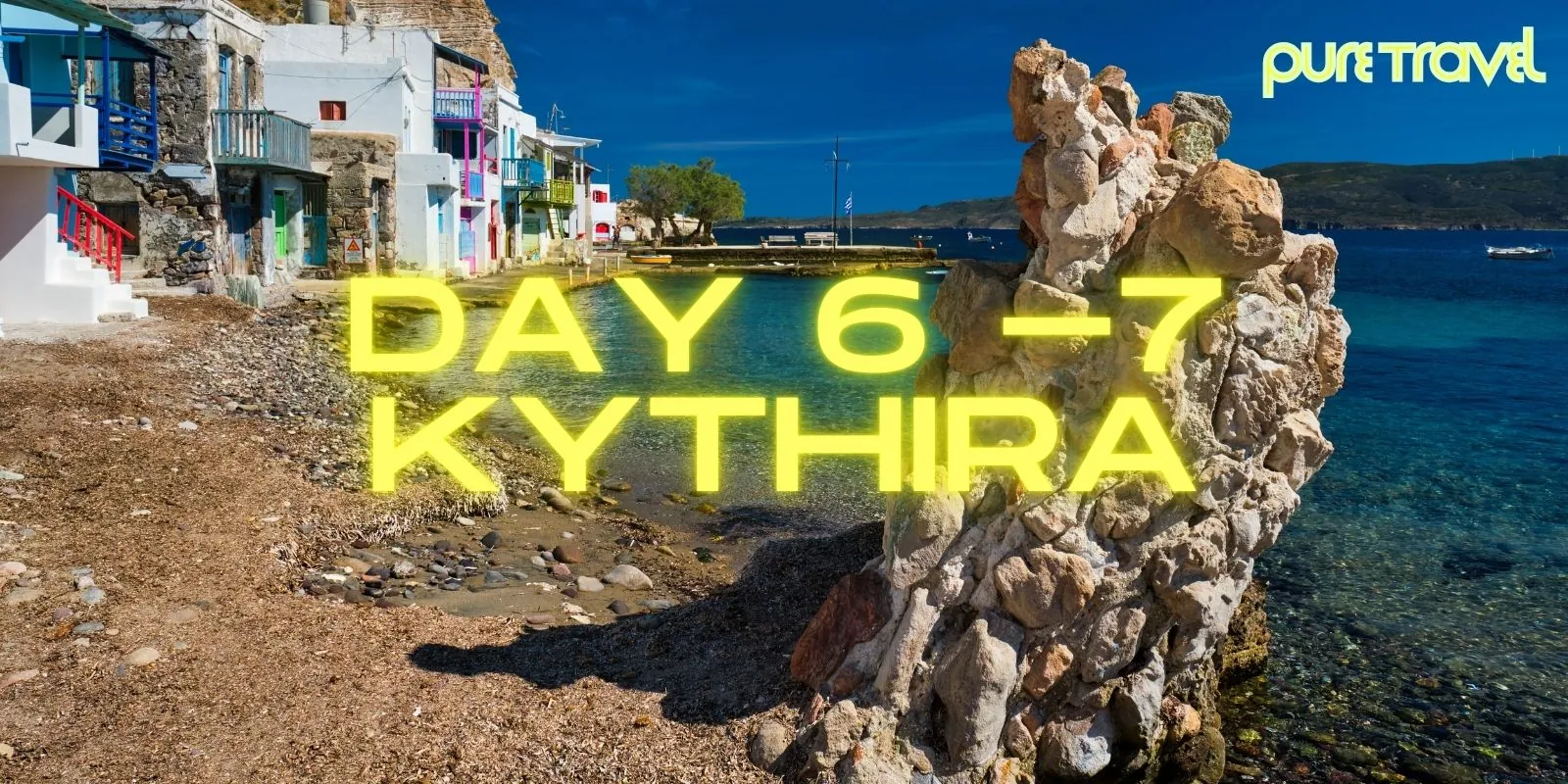
Day 6 -7 Kythira: Island Of Love, Legends, And Hidden Coves
Day 6 -7 Kythira carried us from the olive-lined coasts of Kalamata to the dreamlike island of Kythira — a hidden gem where cliffs tumble into turquoise waters and time drifts slowly. A scenic drive, a gentle ferry ride, and an island evening made this one of Greece’s most peaceful chapters.
Introduction: From Coastline to Island Calm
Leaving behind Kalamata’s sun-kissed promenade, we packed up early, coffee in hand, ready for a day that promised both sea and serenity. Our goal: the island of Kythira, long celebrated for its untouched beaches and mythic charm. It felt like we were moving deeper into Greece’s heart — away from tourist trails and into the rhythm of island life.
The morning air was cool as we began the 3-hour drive to Neapoli (Laconia). The road wound through olive groves and sleepy villages, the scent of wild thyme wafting in through the open windows. Each curve revealed a new vista — rugged hillsides, glimpses of blue sea, and shepherds guiding goats across the dusty roadside. By mid-morning, the landscape softened into coastal plains, and soon the small port of Neapoli appeared, framed by the calm shimmer of the Myrtoan Sea.
Morning Journey: The Road and the Ferry
Neapoli’s harbor was quiet, its water so still it mirrored the sky. We boarded the ferry to Kythira (about 1 hour 15 minutes, €15 per passenger / €40 for the car), joining a handful of locals and a few travelers with backpacks and sun hats. The hum of the ferry engine blended with the soft cries of seagulls circling above.
As the ferry pulled away, we watched the Peloponnese shrink behind us — olive hills fading into the horizon. The sea breeze was warm and salty, tangling my hair as we leaned over the railing. There was a sense of timelessness here, the kind that only travel across open water can bring. The ferry’s small café served hot coffee (€2) and koulouri — sesame bread rings that crunched pleasantly against the salt air.
Day 6 -7 Kythira – When the island came into view, it felt like something from a painting — cliffs rising from the water, dotted with whitewashed houses and flashes of bougainvillea. Kythira was smaller and quieter than we’d imagined, a blend of Ionian charm and Cycladic brightness, untouched and beautifully slow.
Afternoon: Exploring Chora and Kapsali Beach – Day 6 -7 Kythira
Disembarking, we drove inland toward Chora, Kythira’s main village. The road climbed gently through olive-draped hills before revealing a breathtaking view of the sea. Chora unfolded like a storybook — narrow alleys lined with stone houses, hidden courtyards filled with jasmine, and the scent of baking bread drifting from unseen kitchens.
At the top of the town stood the Venetian Castle of Kythira (free entry), a graceful ruin overlooking two shimmering bays. The wind carried the sound of waves crashing far below, and as we walked the old ramparts, the world seemed to fall away. Day 6 -7 Kythira – The castle’s worn stones glowed honey-gold under the afternoon sun.
By late afternoon, we made our way down to Kapsali Beach, a twin-bay cove at the foot of the cliffs. The water was impossibly clear — turquoise fading into sapphire — and the air buzzed softly with the hum of cicadas. We swam until our skin tingled from salt and sun, then lay back on the warm pebbles, listening to the gentle lap of waves.
Evening: Island Flavors and Quiet Nights
As sunset draped Chora in shades of rose and amber, we settled into a small family-run guesthouse (€55 / ~AUD 92) with whitewashed walls and a balcony overlooking the Aegean. The owner, a kind elderly woman, greeted us with a glass of homemade lemon liqueur — sweet, tart, and chilled just right.
Dinner was a feast of island flavors at a nearby taverna: goat stew with rosemary (€13 / ~AUD 22), octopus in red wine (€15 / ~AUD 25), and a crisp white wine from the Peloponnese (€6 a glass). The aromas of garlic, herbs, and sea salt filled the night air as we ate under string lights, listening to the distant strum of a bouzouki.
The island moved at its own pace — unhurried, sincere, and quietly magical. As we walked back through Chora’s lantern-lit alleys, the scent of jasmine trailed behind us. Kythira felt like a secret — one we were to have found.
Pro Traveler Tip – Day 6 -7 Kythira
Book your Neapoli–Kythira ferry in advance during summer months, as spaces for cars fill quickly. Once on the island, renting a car is essential to explore beaches and villages — local buses are infrequent.
Pro Traveler Warning
Kythira’s roads can be narrow and winding, especially near Chora and Kapsali. Drive cautiously at night — street lighting is limited, and goats often wander onto the road.
Your Island of Stillness
Day 6 -7 Kythira wasn’t about grand monuments or bustling towns — it was about simplicity. The open road, the soft sway of the ferry, the quiet beaches, and a dinner beneath the stars reminded us why we travel: to find stillness in motion and beauty in the spaces between destinations. Kythira gave us both — and more.
Frequently Asked Questions – Day 6–7 Kythira (Island of Love and Legends)
Where is Kythira located?
Kythira lies off the southern tip of the Peloponnese, between the Ionian and Aegean Seas. It’s accessible by ferry from Neapoli (Laconia) or by seasonal flights from Athens.
How do I get to Kythira from the Peloponnese?
The most common route is by ferry from Neapoli to Diakofti Port on Kythira. The crossing takes about 1 hour 15 minutes and costs around €15 per passenger and €40 for a car.
Is Kythira worth visiting?
Absolutely. Kythira is one of Greece’s most unspoiled islands — known for its romantic villages, Venetian castles, hidden coves, and authentic local charm, far from the crowds of Santorini or Mykonos.
How many days should I spend in Kythira?
Two to three days is ideal to explore Chora, Kapsali Beach, Avlemonas, and the island’s scenic drives. A longer stay allows time for hiking, secluded beaches, and relaxing at a slower pace.
Do I need a car on Kythira?
Yes. Public transport is limited, and many of the island’s best beaches and mountain villages are only reachable by car. Rentals are available at the port and in Chora.
What are the must-see places on Kythira?
Highlights include Chora (the main town), Kapsali Beach, the Venetian Castle, Avlemonas village, the Waterfalls of Mylopotamos, and secluded beaches like Kaladi and Firi Ammos.
What is Kythira known for?
Kythira is often called the “Island of Aphrodite” — birthplace of the goddess of love in ancient mythology. It’s also famed for its tranquil atmosphere, olive oil, honey, and traditional hospitality.
When is the best time to visit Kythira?
May to September is ideal. Spring offers wildflowers and mild weather, while summer brings warm seas and vibrant local festivals. Late September is peaceful and perfect for couples.
Are there good places to eat on Kythira?
Yes! Try family-run tavernas in Chora and Kapsali serving local dishes like goat stew, octopus in red wine, and freshly caught fish. Pair meals with Kythira’s aromatic local wines.
Is Kythira family-friendly?
Definitely. Kythira is calm, safe, and filled with shallow beaches perfect for children. Families will also enjoy the island’s nature walks and friendly small-town atmosphere