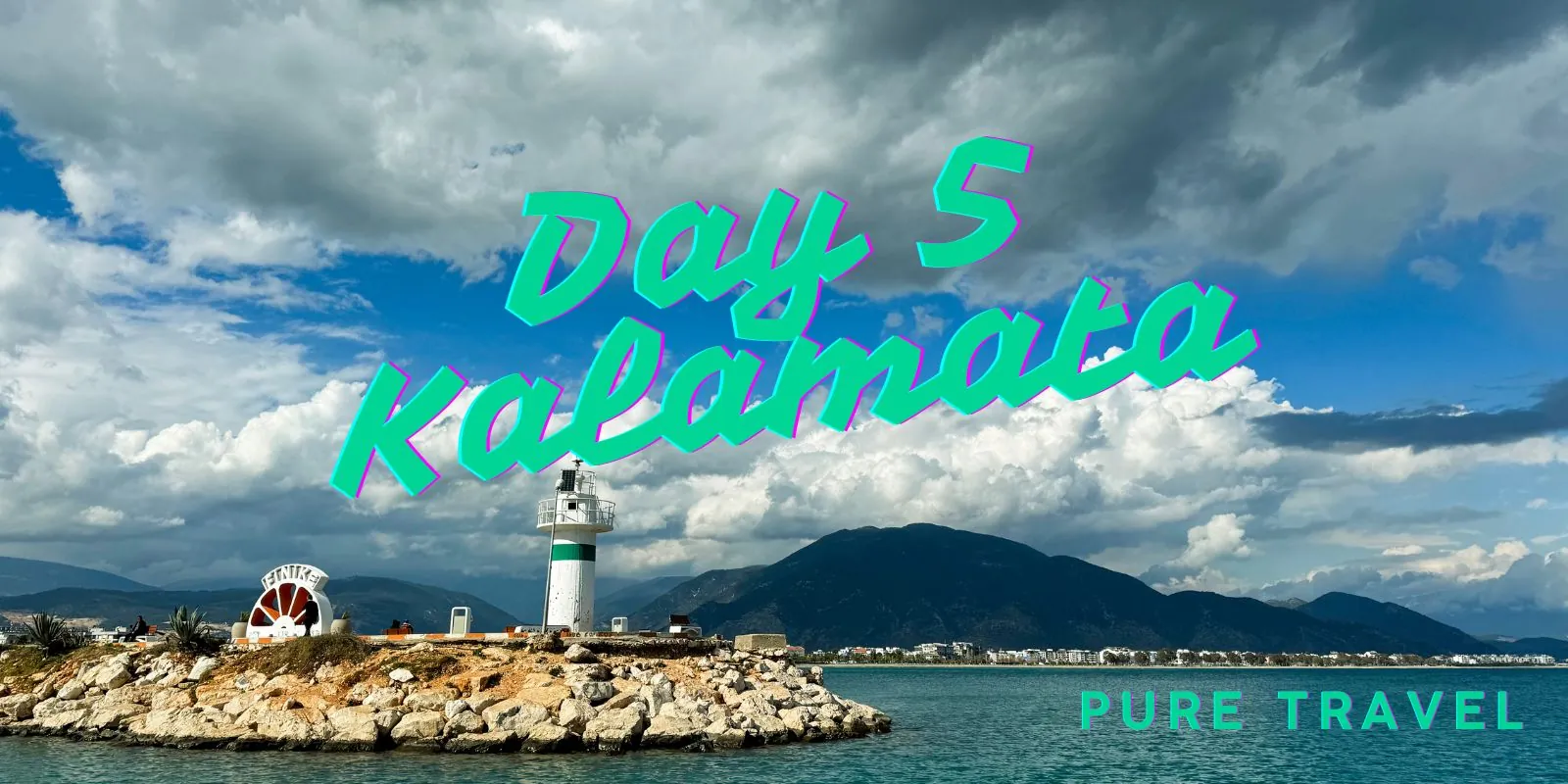
Day 5 Kalamata: Discovering The Heart Of The Peloponnese
From ancient Olympia’s echoes of glory to the sunlit shores of Kalamata, Day 5 Kalamata unfolded in pure Mediterranean rhythm. A two-hour drive through the heart of the Peloponnese led us to golden beaches, olive-rich markets, and a seaside evening drenched in flavor and calm.
Introduction: From Ancient Stones to Coastal Calm
After days immersed in the myths and ruins of Olympia, we woke early, ready for a change of pace — trading history for horizon. The morning light poured over the Peloponnese as we packed our small hatchback and began the 2-hour drive to Kalamata. This stretch of road was among the most scenic yet: winding mountain passes, olive groves rippling in silver-green waves, and bursts of wildflowers along the roadside. The air smelled faintly of pine and salt — a preview of the coast waiting ahead.
As the terrain flattened near the Gulf of Messinia, the blue of the Aegean appeared — wide, glittering, and impossibly inviting. Kalamata, famous for its olives and sun-drenched beaches, promised a day of pure Greek ease after the intensity of our archaeological wanderings.
Day 5 Kalamata – The closer we drew to Kalamata, the more the landscape softened — rugged hills giving way to fertile plains dotted with citrus trees and vineyards. Roadside signs pointed to family-run olive presses and tiny coastal villages where fishing boats bobbed lazily in the shallows. By the time we reached the city limits, the scent of the sea had fully taken over, mingling with the sweetness of jasmine and the earthy aroma of freshly turned soil. It felt like arriving at Greece’s beating heart — where land, labor, and leisure flow together in one golden rhythm.
Morning Drive: A Road Paved with Olive Dreams
The drive itself was a journey worth savoring. The road twisted through sleepy mountain villages, where whitewashed houses clung to hillsides and locals waved from doorsteps with that effortless Greek warmth. Occasionally, we’d pass roadside stalls selling honey, herbs, and olive oil in glass bottles that gleamed like liquid gold.
By late morning, we rolled into Kalamata, a city that blends cosmopolitan charm with the laid-back rhythm of the sea. The first thing we did — almost instinctively — was head straight to the beachfront. The Kalamata Beach Promenade stretched for kilometers, lined with palm trees, cafés, and swimmers already staking out their sunny spots. The sand was soft, the sea calm and glassy, and the scent of sunscreen mingled with the briny breeze.
We spent a slow hour walking barefoot along the surf, the water cool against our skin. It was a small luxury — after days of dusty ruins and long drives — to simply exist by the sea.
Afternoon: Markets, Olives, and a Taste of Kalamata
After freshening up at our small family-run guesthouse (€60 / ~AUD 100), we set off for the heart of the city: the Kalamata Central Market. Inside, the air was alive with the sounds and smells of Greece — vendors calling out prices, the earthy aroma of ripe tomatoes, and rows of glossy black olives glistening under the lights.
Day 5 Kalamata – We sampled a few varieties of Kalamata olives — meaty, tangy, and bursting with flavor — and bought a small jar (€4 / ~AUD 7) to take home. Nearby, an elderly man offered us slices of fresh bread dipped in his homemade olive oil. It was grassy and peppery, a reminder that in Kalamata, olive oil isn’t just food — it’s heritage.
We stopped for lunch at a nearby café where the air carried the scent of grilled meat and oregano. I ordered a Greek salad (€8) piled high with feta, olives, cucumber, and tomatoes that tasted like sunshine. My partner chose gyros (€10) — juicy pork wrapped in warm pita with a dollop of tzatziki. With two cold bottles of Mythos beer (€4 each), it was the perfect midday feast under the hum of ceiling fans and quiet conversation.
Evening: Dining by the Sea – Day 5 Kalamata
As evening painted the sky in orange and rose, we made our way back to the promenade. The sea had turned a deep shade of blue, and the air was thick with the aroma of grilled fish and sea salt. We found a table at a beachside taverna, candles flickering in the gentle breeze, waves lapping softly against the rocks below.
Day 5 Kalamata – I ordered the catch of the day — a whole sea bream (€20 / ~AUD 33), simply grilled and drizzled with lemon and olive oil. My partner opted for shrimp saganaki (€18 / ~AUD 30), the prawns swimming in a rich tomato and feta sauce. The first bite was pure bliss — the smoky char of the fish mingling with citrus and salt. We toasted the day with a glass of local retsina wine, its resinous flavor surprisingly refreshing.
The sounds around us — soft laughter, the clinking of glasses, the distant hum of Greek music — created a gentle symphony that perfectly matched the slow rhythm of Kalamata life. Beneath a sky thick with stars, we walked back along the sand, the cool night breeze brushing against our sun-warmed skin.
Pro Traveler Tip – Day 5 Kalamata
Visit the Kalamata Central Market around late morning when it’s most vibrant and full of tastings. For the best beach experience, head to the far western end of the promenade where the crowds thin out, and the water is crystal clear.
Pro Traveler Warning
Parking along the Kalamata seafront can be tricky in summer months — arrive early or park a few streets back to avoid fines. Also, note that many beach tavernas include a small cover charge (€1–2) for bread and water, even if you don’t request it.
Your Coastal Chapter of Calm
Day 5 in Kalamata reminded us that travel isn’t always about the monumental — sometimes it’s about moments of stillness, flavor, and salt on the skin. From the scent of olives to the lull of the Aegean, Kalamata was our pause between adventures — a warm, sunlit breath before the journey pressed on.
Frequently Asked Questions – Day 5 Kalamata
How far is Kalamata from Olympia?
The drive from Olympia to Kalamata takes about 2 to 2.5 hours (approximately 120 km) via the scenic Peloponnese route. The road is well-paved and passes through olive groves, vineyards, and mountain villages.
What is Kalamata best known for?
Kalamata is world-famous for its olives and olive oil, but it’s also known for its long sandy beaches, vibrant central market, and relaxed seaside charm. It’s the perfect blend of culture, cuisine, and coastal calm.
Is Kalamata worth visiting?
Absolutely. Kalamata offers authentic Greek life with fewer tourists, fantastic local food, scenic drives, and easy access to nearby beaches and mountain villages. It’s ideal for travelers seeking local culture and relaxation.
What’s the best time to visit Kalamata?
Spring (April–June) and autumn (September–October) offer warm weather, blooming landscapes, and fewer crowds. July and August are great for beach days but can be hot and busy.
What are the top things to do in Kalamata?
Visit the Kalamata Central Market, walk the seaside promenade, explore the old town and castle, enjoy local tavernas, and of course — sample the region’s famous olives and olive oil.
Are Kalamata beaches nice?
Yes! Kalamata’s main beach is clean, well-maintained, and lined with beach bars and cafés. The western end of the promenade offers clearer water and quieter spots for swimming or sunbathing.
Can you buy local olive oil in Kalamata?
Definitely. The Kalamata Central Market and nearby family-run shops sell fresh, high-quality olive oil and olives — often directly from local producers. Many even offer free tastings.
Where should I eat in Kalamata?
For authentic Greek flavors, try seaside tavernas along the promenade or traditional spots near the central market. Don’t miss dishes like grilled sea bream, shrimp saganaki, and Greek salad with Kalamata olives.
Is Kalamata family-friendly?
Yes, Kalamata is a great destination for families. The beaches are calm, restaurants are welcoming to children, and the city’s relaxed pace makes it easy to explore with kids.
Do I need a car in Kalamata?
While the city itself is walkable, a car is recommended if you want to explore nearby attractions like Kardamyli, Methoni, or the Mani Peninsula. Parking is easier a few streets back from the seafront.