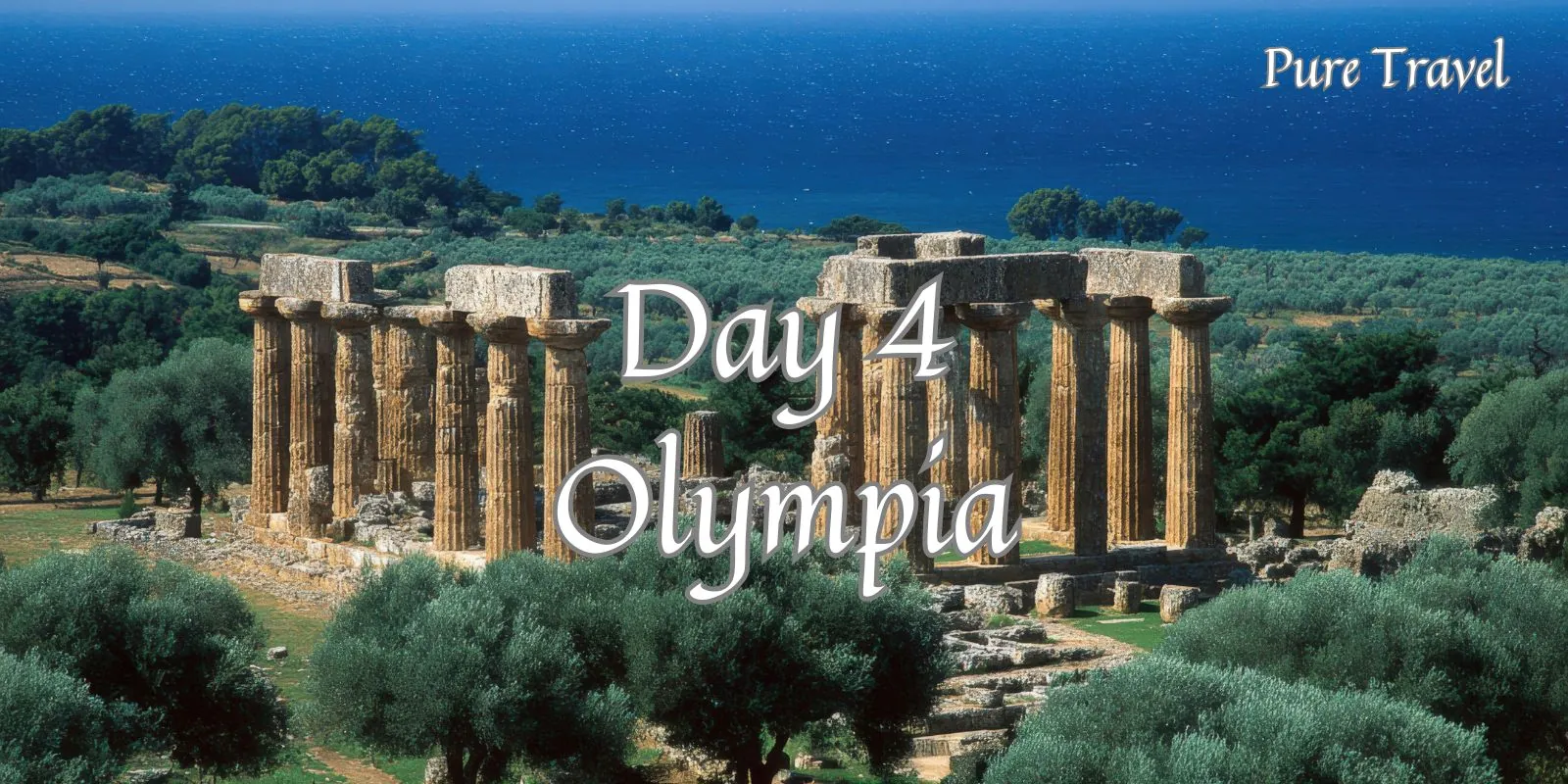
Day 4 Olympia: A Journey Through Time, Temples, And Triumph
Day 4 Olympia led us from the romance of Nafplio to the sacred grounds of Olympia — where ancient athletes once raced for glory. Driving through the heart of the Peloponnese, we discovered Greece’s lush countryside, explored timeless ruins, and walked the same track where the Olympic Games began.
Introduction: From Coastal Grace to Ancient Glory
We left Nafplio in the soft morning light, the sea still glimmering faintly in the rearview mirror. The day promised a journey through myth and time — to Olympia, the birthplace of the Olympic Games and one of Greece’s most storied archaeological sites. Our rental car (€40/day) waited outside the hotel, packed and ready for the three-hour drive ahead.
The road wound gently through the Peloponnese, past olive groves, vineyards, and fields bursting with wildflowers. The smell of warm earth and pine drifted through the open windows. We stopped at a roadside café near Tripoli for a quick espresso (€2 each) and shared a still-warm bougatsa pastry filled with creamy custard (€3). The café radio played soft Greek pop, and locals chatted about football and politics — the easy rhythm of rural life.
Morning Drive: Through the Heart of the Peloponnese
As we drove further west, the landscape changed — the hills grew greener, the air cooler. Passing through Pyrgos, the scent of orange blossoms and eucalyptus filled the car. Around midday, we reached Olympia, nestled in a lush valley between the Alpheios and Kladeos rivers. It was quieter than we’d imagined — serene, shaded, and humming softly with cicadas.
After parking, we bought tickets for the Archaeological Site of Olympia (€12 / ~AUD 20), which included entry to the sprawling ruins and the on-site museum. Standing at the entrance, I felt a little shiver — this was where it all began, where sport and spirituality once met in celebration of human excellence.
Afternoon: Walking Among Legends
The first sight that caught my eye was the majestic ruin of the Temple of Zeus. Once home to one of the Seven Wonders of the Ancient World — a 13-meter statue of the god himself — only the fallen columns remain, yet their power endures. Each stone seemed to hum with stories of devotion and glory.
Nearby, the training grounds — the palaestra and gymnasium — gave a glimpse into the athletes’ lives. The air smelled of sun-warmed dust and wild herbs as we imagined runners, wrestlers, and discus throwers preparing for the ancient games. The sound of rustling leaves and distant birds filled the silence — a soundtrack as timeless as the stones themselves.
The highlight came at the ancient stadium. We stood at the starting line, carved into stone, and couldn’t resist a friendly race. The ground was rough beneath our sandals, the midday sun bright above us. It was exhilarating to run where athletes had competed nearly 3,000 years ago — no medals, no crowds, just the wind and laughter echoing across time.
Before leaving, we toured the Archaeological Museum (€6 / ~AUD 10), home to exquisite sculptures and artifacts — including the famous statue of Hermes by Praxiteles. Day 4 Olympia – The cool air inside was a welcome relief after the afternoon heat, and each artifact seemed to whisper fragments of forgotten glory.
Evening: A Taste of Olympia – Day 4 Olympia
As the sun dipped lower, we wandered into the small village of Archaia Olympia. The main street was lined with souvenir shops, family-run restaurants, and the gentle chatter of evening life. We chose a taverna shaded by vines, where the owner welcomed us with a smile and a basket of warm bread.
I ordered chicken souvlaki (€10 / ~AUD 17), tender and smoky, served with lemony potatoes and tzatziki. My partner had moussaka (€12 / ~AUD 20), rich with cinnamon and béchamel. We paired it with a carafe of local red wine (€6) and finished with complimentary honey-drenched loukoumades (Greek doughnuts). Day 4 Olympia -The night air was filled with the scent of grilled meat, jasmine, and laughter — a fitting end to a day spent tracing history’s footsteps.
Our guesthouse (€45 / ~AUD 75) overlooked olive groves bathed in moonlight. As we sat on the balcony with one last glass of wine, the chirp of crickets filled the stillness. Olympia had left us humbled — not by its ruins, but by its quiet endurance.
Pro Traveler Tip – Day 4 Olympia
Arrive early at the Olympia Archaeological Site to avoid crowds and heat — the morning light also makes for perfect photos. Wear comfortable shoes and bring water; the grounds are large, and shade is limited.
Pro Traveler Warning
Olympia’s summer temperatures can soar above 35°C, and there are few shaded areas. Skip midday visits if possible. Parking near the entrance is limited, so arrive before 10 AM to secure a spot.
Your Journey Through Ancient Greatness
Day 4 was more than a history lesson — it was a pilgrimage. From the quiet roads of the Peloponnese to the sacred ruins of Olympia, the day felt alive with the echoes of the past. Walking where athletes once ran and gods were honored reminded us that travel, like the Games themselves, celebrates the timeless pursuit of wonder.
Frequently Asked Questions – Day 4 Olympia
How far is Olympia from Nafplio?
The drive from Nafplio to Olympia takes about 3 to 3.5 hours (approximately 190 km). It’s a scenic route through the heart of the Peloponnese, passing olive groves, vineyards, and charming mountain villages.
Can you visit Olympia as a day trip from Athens?
It’s possible but long — about 5 hours each way by car. For a more relaxed experience, consider staying overnight in Archaia Olympia or including it as part of a multi-day Peloponnese road trip.
What is there to see at the Archaeological Site of Olympia?
Highlights include the Temple of Zeus, the Temple of Hera, the ancient stadium, the palaestra, and the gymnasium. Don’t miss the Archaeological Museum for the Hermes of Praxiteles and other masterpieces.
How much are tickets to Olympia?
A combined ticket to the Archaeological Site and Museum costs €12 (~AUD 20). Entry is free for EU students and discounted for non-EU students and seniors.
What’s the best time of year to visit Olympia?
Spring (April–June) and autumn (September–October) offer ideal weather and fewer crowds. Summer can be very hot, so plan early morning visits if traveling between June and August.
Is the Olympia site walkable?
Yes, the site is spread across a large area but easily explored on foot. Paths are mostly level, though uneven in places, so comfortable walking shoes are recommended.
Can you still run on the ancient Olympic track?
Yes! Visitors are encouraged to walk or run on the ancient stadium track — it’s one of the most memorable experiences in Olympia.
Are there restaurants near the Olympia ruins?
Yes, the nearby village of Archaia Olympia has plenty of tavernas serving classic Greek dishes such as souvlaki, moussaka, and loukoumades. Many have outdoor seating with views of olive groves.
Is Olympia family-friendly?
Very much so. Kids love the open spaces, and the chance to “race” in the ancient stadium makes it fun and educational. Bring hats and water during summer visits.
Where can I stay in Olympia?
Charming guesthouses and boutique hotels can be found in Archaia Olympia village, many overlooking olive groves. Prices range from €40–€90 per night depending on season and amenities.